Part 5: Feast Keeping Zealotry—Distractions and Fatalistic Theories
In part two, I endeavored to show that holiday festivals are different from the feasts mentioned in the Old Testament. While celebrating Old Testament festivals is no longer a general requirement, Jesus remains the great center of attraction and the primary shaper of our lives. So while I think people are free to observe the annual festivals as they deem spiritually beneficial to them, I think a few words of caution are appropriate to this discussion.
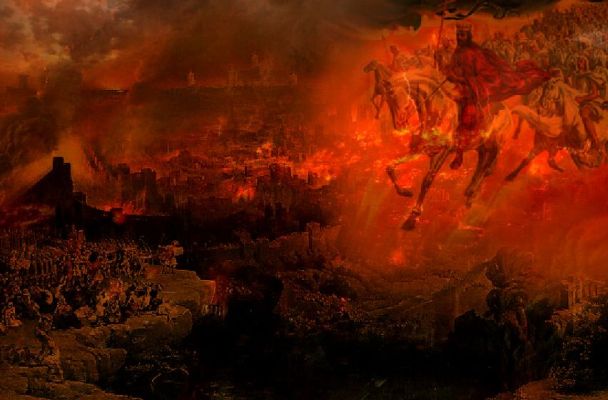
In some Evangelical Christian associations, feast keeping includes investment in Hebraic Old Testament culture, especially as it relates to end-time fulfillment. Such groups do not invest in observing the festivals because they hold to the idea that Jesus abolished the festivals and replaced the Jewish law with grace. Keeping festivals, however, is about reviving interest in futurism, which has become popular among some religious conservatives, whose theology is connected to prophecies of how the world will end. Dispensational premillennialism is a political theology that uncritically supports the State of Israel, rationalizing systematic humiliation of a people and enthusiasm for holy war as acceptable parts of God’s prophetic end-time plan. When religious nationalists and Christian Zionists get caught up in a political ideology and follow Jewish practices, it turns the fertile ground of biblical types and Jewish traditions into distorting mirrors of superiority and exclusion. Such national-religious messianism creates tensions and fatalistic attitudes that stray from God’s intention to bless the world; it does not have Jewish people’s best interests at heart.
Christian feast keeping can have other negative effects when interpretations claim that failing to keep the Old Testament feasts is a sin. In my opinion, supporting feast keeping as a requirement for God’s superior end-time remnant or as a mandatory practice for the true community that “keep[s] the commandments of God” (Revelation 14:12) is not in accordance with the testimony of Jesus. It is important to emphasize once again that no one today can strictly or completely “keep” the biblical feasts according to the biblical instructions. Christians who believe that the Old Testament festivals are mandatory create their own standards for reenacting them, which often offends by appearing to replace Jewish identity.
It is good to celebrate the holiday festivals to develop a deeper understanding of the redemption plan, or to build better relationships with Jewish people. Such approaches can be highly rewarding for anyone who wants to understand their connection to the prophetic events and their fulfillment, but when these celebrations are made requirements or engaged in ways that aim to exclude rather than include, they become distractions from the truth as revealed by Jesus. This type of feast keeping is the antithesis of what God’s festivals were meant to be—times to remember God’s mercy and to act justly and compassionately like Jesus—and is problematic and even hurtful; it’s an approach I want nothing to do with.
I would be remiss if I did not include a brief discussion of a more wholesome look at the festivals’ prophetic significance and relationship to the end times. This view is not political in nature centered around the State of Israel but a fulfillment of God’s redemption plan spreading out from Israel to the other nations. Its message is meant to bless the world and validate people’s hope in God’s saving work. This view of the festivals presents a greater day of hope, not a fatalistic attitude or a messianic fervor for military victory in the Middle East.
Bible prophecies frequently include imagery of the festivals to describe the redemption God will bring about through a new exodus that leads to a new promised land—a transformed world—in which God will dwell among us. Their message brings hope of rescue, renewal, and reconciliation, presenting a caring God who will liberate and cleanse us for a healed world that includes His abiding presence. This is an end-time message of inclusion that extends from Israel to all of God’s children, “from every nation, kindred, tongue and people” (Revelation 7:9). There is no need to fear or worry about end-time events, as God will spread His Sukkot over us to protect and shelter us as we face hardship and persecution (Revelation 7:15). We are called to persevere in the light of the festivals’ spiritual message: just as God delivered and led Israel in the wilderness, He will deliver and guide us to eternal life in His presence on a renewed earth (Revelation 21– 22).
Knowing the difference between healthy and unhealthy eschatological interpretations of the festivals is helpful:
- Prophetic interest in the festivals as futuristic interpretations of the end times to bring about the rapture or the coming of Jesus, which includes keeping feast days as a requirement for a superior remnant or as a part of an end-time fatalistic attitude that inspires political nationalists and holy war enthusiasts.
- Prophetic interest in the festivals as interest in the meaning of the end times and a spiritual perception of God’s blessing for the world includes learning about God’s prophetic plan as a day of hope, cleansing, and transformation for a liberated and healed world in which God’s presence dwells.
Craig Ashton Jr.
 Theological InTents
Leave a comment