Grappling
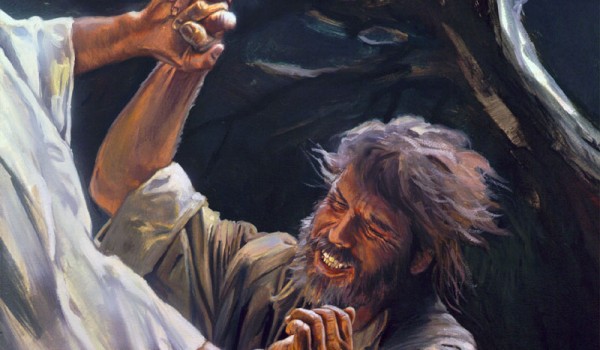
What does Jacob’s wrestling match in Genesis 32 reveal about who we are, and how might this struggle illustrate those who grapple with God during the closing scenes of this earth’s history? Will we really wrestle with God, fighting to overcome our sins and defects of character, or is God wrestling with us? I think we tend to read the story of Jacob’s struggling backwards. I know I once did. It seems to be about Jacob wrestling with God in anxiety and fear, trying to squeeze out a final blessing from Him. That may be true, but often overlooked is that the story suggests a far greater wrestling match: God wrestling with Jacob.
In the struggle, Jacob wouldn’t let go until he received the blessing he had long sought. This blessing included naming him Israel, though the popular interpretation of this new name change also gets it backwards. According to the best commentaries I have read, that Jacob is named Israel does not mean that he prevails but rather that God prevails (See Gordon J. Wenham, Genesis 16-50 (Word Biblical Commentary), p. 296-297). Might this change in how we read the story affect how we characterize our wrestling with God? Might grappling with God in the closing scenes of earth’s history be not about sinlessness but preserving faithfulness?
Jacob’s prevailing to overcome sin is not the central issue. The story’s angle is not us struggling to overcome until we emerge absolutely perfect. Jacob did not succeed by seizing God and squeezing out a blessing; he did not earn the blessing through his own efforts. In that grappling match, it was God who reached out, urging, pursuing, pushing, and pulling Jacob into the man God wanted him to be (see John Goldingay, Genesis for Everyone, Part 2: Chapters 17–50 (The Old Testament for Everyone), p. 117).
In the words of Abraham Joshua Heschel, “God is pursuing man” (God in Search of Man, p.136). God loves us enough to reach out to us and wrestle with us. We are sought and pursued by God all our lives; He grapples with us, urging and gently pushing us beyond our comfort zones. God will test our faith and push us to our limits, but he will not go beyond that point because He seeks to win us, not overwhelm us.
God may be very good at winning, but He will not force a win because only by love is love awakened. Therefore, we can conclude that if in the end, a final generation of faithful saints grapples with God like Jacob did, the generation that comes to completely trust in the grace of God will have imperfections of character. Jacob emerged from his struggle confident and victorious not because he successfully overcame his anxieties and faults but because he clung to the ankles of a man he discovered later was God Himself. As Jacob grappled in his weakness, he laid hold of the strength of God and by relying on God he no longer needed to struggle.
The wrestling match laid Jacob in the dust as he helplessly clung to God’s embrace. God prevailed for Jacob, doing what Jacob lacked power to do. It is worth noting that Jacob walked with a limp after that. Jacob learned that God’s grace is sufficient and that clinging to God with all his might had been his source of strength. God wants to similarly transform us into the men and women he wants us to be. This has everything to do with who we are and the identification of God’s people in the final time of Jacob’s struggle.
Jacob may have found himself alone and afraid as he faced his anxieties and fears, including the heavy weight of self-reproach for his past failures, but he was not isolated from the divine. The image of God pursuing and wrestling us reflects His desire to win us over. Jacob finally followed God by steadfastly clinging to his heels, but overcoming was all because God was urging, pushing, and pulling Jacob into the man God wanted him to be.
Might these changes affect how we characterize the remnant that will wrestle with God in the end? They place the focus not on our struggle to achieve sinlessness but on yielding to God’s blessing. We are all God-wrestlers. The question remains, however: when will we let God prevail in our lives?
Craig Ashton Jr.
 Theological InTents
Leave a comment