Part 2: Typical Feasts and Holiday Festivals
In my last post, I aimed to show the difference between the ceremonies given by God and the ceremonies and rites that have been distorted and misused by the New Testament Scribes and Pharisees. Which do you think were abolished, and which do you think were fulfilled?
To think that Judaism has not changed in the last 2,000 years or is based on a merit system of salvation by works is a product of anti-Jewish theology. Over the years, I have considered it a privilege to speak with many Jewish people about the Bible, greatly enjoying my conversations with orthodox, reformed, and secular Jewish friends. This has led to invitations to their synagogues, where I have received lessons on sounding the shofar and even taken Hebrew classes. My lovely wife is part Jewish, and we incorporated some Jewish traditions into our wedding. Shabbat candles and braided challah have enhanced our family devotions as we welcomed the Sabbath over the years. I have deep respect for these observances and feel privileged to have been invited to a seder organized by a local rabbi.
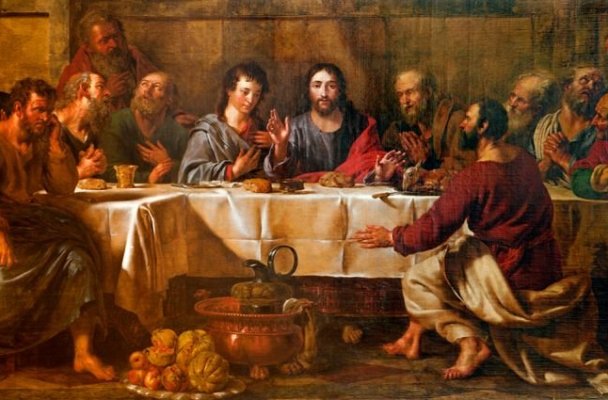
Over the years, I have conducted family Passover seders as well as an interdenominational Passover communion, which was attended by people throughout the community and held at my local church on the Sabbath closest to Passover and Easter. Christians from other denominations and churches, including those from the Messianic Jewish community, came to experience the story of redemption in a way that reflected Jesus’s Last Supper with His disciples, including the foot washing ceremony He instituted.
This service was previewed and then approved by our local pastor and was specifically communicated to members as not promoting Levitical feast keeping. Regardless, I distinctly remember that one well-intended individual felt the need to convince guests that they should not keep the feasts. Afterwards, I was called “too Jewish” by a church member; I suppose some believed I was a heretic regarding salvation by works. What these dear folks did not understand was that the Passover-themed communion was not a Levitical feast-keeping event. It did not intend to “keep” the feasts. Today, no one can strictly keep the feasts according to the biblical instructions (I’ll speak more on this in a later post), and I was surprised by the blatant ignorance concerning the legality of feast keeping. The fact that the Last Supper communion event was successful and spiritually beneficial to members and visitors didn’t matter to its critics. Paul broached this very issue when he instructed us to let no one judge observances that celebrate Christ (Colossians 2:16–17).
I have found that most people in my church are unable to relate to Jewish people. I have often heard them speak disparagingly about the Jews’ 613 commandments because they believe God only gave 10, unaware that Jewish tradition counts a total of 613 positive (dos) and negative (don’ts) commandments in the Torah. Because many Adventists pay little attention to historical context, there is much confusion about the feasts. I have found that most church members have nothing meaningful to share with Jewish friends.
It’s important to understand the difference between the Jewish festivals and Levitical feast days, as there is a significant distinction. Following the destruction of the temple in 70 AD, sacrifices and offerings ceased. The Passover observed today by the Jewish people is not a Levitical Passover with sacrificial lambs, just as the Day of Atonement is no longer a Levitical atonement. The Jewish people don’t observe the ceremonial law when celebrating the festival holidays but follow rabbinic traditions and the teachings of the sages.
The Jews’ national Passover ceased with the loss of the temple and sacrifices; the Jewish Passover celebrated today is a post-temple innovation. Taking on new forms and practices, today’s Passover is an example of Jewish creativity, different from the temple festival celebrated during the time of Jesus. Though Jesus did not celebrate the holiday’s seder, today’s Passover seder reflects what He did in the upper room more closely than does the typical church communion, with its stale crackers and tiny thimbles of grape juice.
I think it is helpful to consider that the Bible includes three different definitions of Passover: (1) the one-night event characterized by lambs’ blood on the Israelite doorways, (2) the yearly commemoration of this event that includes sacrificial lambs, a meal, and a story, and (3) a modified service and meal focusing on Christ as the new exodus. In place of the original Passover sacrifice, Christ instituted a new meaning and manner of observance that have far greater significance: a world delivered and liberated by the power of His matchless love. Jesus recast Passover as a celebration of universal redemption through His costly, self-sacrificing love. With so great a salvation, our celebration of what Christ has done should fill us with joyous excitement, and with so much joy, we are not restricted to celebrating only once a year (1 Corinthians 11).
I also think it is significant that the modified Passover meal is vegetarian (which provides a basis for the communion table). The sacrifices and offerings have ceased, but what about the sin of killing animals? Are we sensitized to the mercy of God as symbolized in the ceremonial law? Jesus not only brought animal sacrifices to an end but is portrayed as a suffering and brutalized lamb (Revelation 5:6). He not only provides salvation for all humanity through His sacrifice but also relocates the mercies of God upon animals in a new horizon of peace for all creation.
Since the cross, God has not required us to keep the Levitical ceremonies. Even the Jews do not emphasize the ceremonial law regarding the festivals; since the loss of the temple, they have considered them holidays. However, since many Adventist church members believe that the ceremonial law has been abolished, I guess they feel free to perform Levitical rites and ceremonies whenever they choose. Yet a thorough understanding of the ceremonial law reveals that God designed the ceremonies to end and converge in Christ.
Imagine how upset Christians would be if we taught that Jesus nailed Christmas and Thanksgiving to the cross. Perhaps then you can imagine how Jewish people might react to the idea that Jesus nailed Passover to the cross. Passover is as important to Jewish people as Christmas and Thanksgiving are to us. The shared meal, the family togetherness, and the moral narrative that keeps the story of redemption alive were not abolished at the cross. A quick reading of the New Testament discloses that Paul—as well as the churches associated with him—observed Passover long after he became a follower of Jesus (Acts 20:1–6).
Knowing the difference between holiday festivals and Levitical festivals is important and helpful:
- Jewish holidays and festivals include traditions that Jesus followed. A Passover seder or Passover communion service is a unique learning experience about what happened in the upper room during the Last Supper. Such adapted programs are about Christ, not conformity to empty ceremonial rituals connected to the sacrifices.
- Levitical feast keeping is the re-creation of Israelite festivals to pass a test or meet a faith requirement in order to obtain commandment keeping status. Lacking a formal system (such as that instituted in the Temple) that regulates the keeping of the various festivals, Christian feast keepers and splinter groups are merely doing what they believe is right, rather then practicing the holidays.
Knowing this difference is vital to our relationships with Jewish people.
Craig Ashton Jr.
 Theological InTents
Leave a comment