Testing Abraham
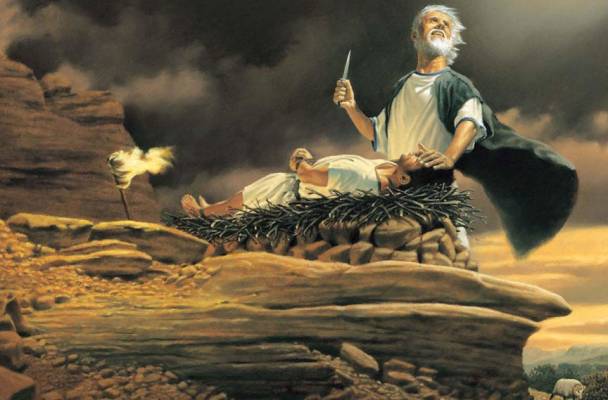
The story of Abraham and Isaac in Genesis chapter 22:1-14 is both troubling and fascinating. I understand the interpretation of the chapter foreshadowing Jesus, but there is something surprising and profound beneath the surface to be revealed on the mountaintop. The text says that God was testing Abraham, but what kind of test was this?
I find it significant that commentaries say that the original Hebrew wording gives us the sense that God asking Abraham to take his son was not a command, but a request (Genesis 22:2). God does not insist on Abraham’s unquestioning obedience to a harsh command, but rather suggests with a veiled request. This is not a God of harsh, incomprehensible commands. Abraham was free to refuse, but the story says that he immediately volunteered to carry out this unexpected request. There’s more meaning to the story than an obedient Abraham. The story is about discovering that God is totally different. The test is whether Abraham will trust that God is not like the other false gods.
It helps to know that Abraham lived in a child-sacrificing society. In Abraham’s culture, the gods expected their faithful worshippers to sacrifice their children. You can find this in places like Judges 11:39–40 and 2 Kings 3:27. No one would have called the police on Abraham or prescribed medication for parental abuse of a child.
The story begins with Abraham’s search for the place that God would show him. God was going to reveal something to Abraham and Isaac. Moriah is the mountain of seeing (Genesis 22:14). It is a place of seeing and experiencing God, and later in history, it becomes the place of God’s presence in the tabernacle, where the mysteries of redemption are portrayed. Everything in the story points to the kind of person God is and to the promise made at the place of testing.
As the story unfolds, we see Abraham struggling to understand God’s request and even offering other possibilities. This is evident in several statements in the narrative that help us see hints that Abraham is coming to see God differently, even telling the servants that he and Isaac will return together (Genesis 22:5) and that God Himself will provide the sacrifice (Genesis 22:8). Although Abraham did not know that this was a test, he trusted God’s promise that the outcome would be a good one. Abraham finally recognized God when the angel suddenly intervened to stop his reluctant hand from slaughtering Isaac (Genesis 22:11–12). God planned that nothing should happen to the boy. Such an abomination had never entered God’s mind, says the prophet Jeremiah (32:35). Blinded by tears, Abraham never saw the ram caught in the thicket until God opened his eyes. The story teaches us a lesson about seeing and knowing by experience.
On the surface, the story is upsetting, but I’ve come to see Abraham and Isaac as daring to believe in a different God, as revealed on Mount Moriah. The focus is on God’s self-giving actions: “He who did not spare His own son, but gave Him up for us all, will He not also with Him graciously give us all things” (Romans 8:31). The story reveals a God who gives. It reveals a God of self-giving love, leading Abraham to a profound realization—that God desires our love and reverence based solely on His character.
Craig Ashton Jr.
 Theological InTents
Leave a comment