Part 8: Conclusion—A New Land of Bounty and Feast
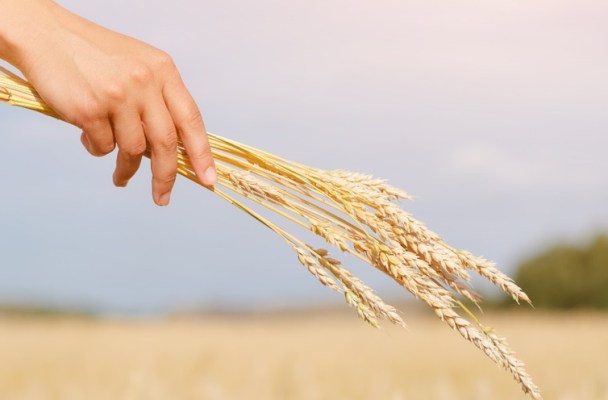
For me, one of the most frustrating aspects of discussions about the festivals is what the feast keeper misses by focusing on commandment and what the feast denier loses by focusing on abandonment. The faith lessons and points of worship within the Israelite festive calendar are clearly structured around planting and harvesting, providing guidance on stewardship of the land and caring for both animals and the needy and oppressed. If any lesson should be retained from the Levitical festivals, it is this: how to care for both human and non-human creation in our worship of our Creator. This is His land, His earth, and His creation.
Reading Michael FeFebvre’s book The Liturgy of Creation has helped me see how the festivals taught the Israelites to be proper stewards of the land God had given them. The jubilees and annual festivals and provisions of the sabbatical year were designed “to maximize the fruitfulness of the land with gratefulness and with God’s love for the poor in their hearts” (2019, p. 45). The festive calendar was also the backbone of the national welfare system, through which those with abundance shared with those less fortunate. In short, the festivals provided a setting for sharing one’s abundance with the needy and poor. Everyone was to be cared for. Everyone was important. Everyone was to be included.
Let me share Ellen White’s words:
The regulations that God established were designed to promote social equality. The provisions of the sabbatical year and the jubilee would, in a great measure, set right that which during the interval had gone wrong in the social and political economy of the nation.
These regulations were designed to bless the rich no less than the poor. They would restrain avarice and a disposition for self-exaltation, and would cultivate a noble spirit of benevolence; and by fostering good will and confidence between all classes, they would promote social order, the stability of government. . . .
If the law given by God for the benefit of the poor had continued to be carried out, how different would be the present condition of the world, morally, spiritually, and temporally! . . .
The principles which God has enjoined, would prevent the terrible evils that in all ages have resulted from the oppression of the rich toward the poor and the suspicion and hatred of the poor toward the rich. While they might hinder the amassing of wealth and the indulgence of unbounded luxury, they would prevent the consequent ignorance and degradation of tens of thousands whose ill-paid servitude is required to build up these colossal fortunes. They would bring a peaceful solution of those problems that now threaten to fill the world with anarchy and bloodshed.
Patriarchs and Prophets, pp. 534–536
The principles of benevolence, which include kindness and generosity to those in need, are not limited to the ceremonial or civil law. How are we treating the vulnerable, the weak, and the outcast today? How can we justly treat the stranger, the widow, and the orphan to bring about peaceful solutions to the problems that now threaten our world (Leviticus 23:22; Deuteronomy 27:19)? It is easy to read descriptions of these ancient celebrations and think that they have been done away with, yet the sabbaths and festivals were radically countercultural, world changing, and deeply theological. They revolved around loving God and your neighbor (Leviticus 19:18). The poor, the widow, the refugee, and the oppressed, however, are often completely absent among both feast keepers and feast abstainers, who miss the clearest command to love your neighbor as yourself. At the end of the festive celebrations, the sabbatical year, and the jubilee, everyone should be free to flourish because everyone is created in the image of God.
What does promoting social equality as a remedy for today’s societal problems look like? How can we invite the stranger, the poor, and the oppressed into the economy of God? Living under the certainty of God’s kindness and compassion though Christ’s example should cultivate kindness, benevolence, and love toward others as we invite the outcasts and needy into the joy of the Lord—ensuring no one is left out or forgotten. The biblical festivals were opportunities to identify those who were suffering and stand up for those in need (Leviticus 23:22). Loving others and treating them with equality and integrity is the peaceable and festive solution. The festive calendar series—from Passover to Booths—marks the journey from cruelty and oppression to a fruitful promised land that celebrates the banquet of God’s love. When all these things are fulfilled, we will experience true union in God’s beloved creation.
Sadly, our calendars, iPhones, and smart watches are divorced from this festive calendar. Separated from the rhythms of nature, we fail to care for the land and those who dwell in it and must find creative ways to return to God’s ideal. The festive calendar is available to shape our vision according to God’s way of life and to remember His goodness. It would be well if we did our best to adapt such benevolence to modern life.
Too often lost in the feast-keeping debate are caring for God’s creation, caring for one another, and the desire for an intimacy with God that goes beyond observing days of cessation. It is important, however, to observe the cadences of nature, thank God for the flourishing productivity of the harvest, love others in our worship of the Creator, and learn to be beneficent and caring toward the poor. It’s not about obedience to fossilized rules but rather being benevolent, loving, and charitable toward all of God’s creation, including the poor, the downtrodden, the outcasts, the land, and the animals.
Focusing only on commandment and regulation can make us forget God’s revelation in Jesus to the point where we become deficient in love. Jesus commanded something new: “to love as I have loved you” (John 13:34-35). When we are busy trying to be superior commandment-keeping remnants in a deluded world of religion, we don’t have time to comfort mourners, uplift the downcast, show kindness to the downtrodden, or love others as Jesus did. It’s not about compliance to law but engaging with the weightier matters of the law. It would be well if we cared about the principles of the annual Sabbaths and the jubilees, as this would remind us of the worshipful patterns of redemption and hope. I am convinced that Jesus did not do away with these good and enduring principles, for they all find significance in His person.
When the annual and jubilee Sabbaths are grounded in a relationship with Jesus, they take on new meaning. The old is not abandoned because it is fulfilled in Jesus, who embraces the whole Jewish economy. Finding our righteousness in Him, we look for every opportunity to celebrate Jesus and His marvelous work of salvation. This should not be confused with mandatory Old Testament feast keeping, for all that God commands and desires of us is that we love Him and our neighbors as ourselves. Jesus fulfills all righteousness and is the great interest that swallows up all others.
There is only one interest I want for my life: to experience the love of God—not only to know His love but to experience His loveliness, fall madly in love with Him, and drink deeply of His love, knowing every beautiful facet of it. It is in this light that the festivals reflect God’s act of redemption and unchangeable love for humanity. It is this costly love that must be preserved and celebrated. I want to make sure I remember the beautiful story of God’s beneficent and generous plan of salvation and keep this message as my focus. God wants to reconcile the universe—both heaven and earth—in an eternal embrace. We must see that everyone matters as we work toward the New Jerusalem coming down from heaven to form God’s new creation on earth. That is what the festivals are all about.
I love how the various festivals of the liturgical calendar became massive feasts—covenant meals with God—for all of Israel. They are pictures of a joyous feast with God that will expand in the future as God Himself prepares a massive feast for all peoples (Isaiah 25:6). From the festival of Passover to the festival of Tabernacles, we see that God heals and redeems the world through His costly love, which He will pour out until until we come into true union with His beloved creation. When all these things are fulfilled, they will converge into one great festival without end.
According to the New Testament, the festivals will culminate in the New Jerusalem of God’s new creation (Revelation 19:9; 21:22). We should not be surprised when the first thing Jesus does when we meet Him in this heavenly promised land is eat a Passover meal with us, just as He promised His disciples in the upper room. Don’t be surprised when we don’t sit in pews with angel deacons coming down the aisles with thimbles of juice and trays of tiny crackers. Instead, we will have a Passover meal at a table miles long. It will be a feast. Oh, what a feast it will be! Jesus will be serving and presiding over that meal with no slaughtered lambs, for death will be no more. It will be a heavenly, festive, and vegetarian celebration with the most wonderful Redeemer we could ever imagine. All tears will be wiped away, for the former things will have passed away, and all things will have become new.
As I wait for that day, Passover reminds me to shed tears over those who are oppressed and abused by the cruel systems of our world—those languishing and longing for God’s liberation. I recognize my obligation to care for the poor and oppressed. The Feast of Unleavened Bread reminds me to work toward the day when evil is overcome and nothing can cause it to rise again. During the Feast of Weeks, I find myself counting down the days, longing for the one when God’s spirit will pour out on all flesh. God cares for the world as He cares for nature. Like the rains that sustain planting and harvesting God lovingly pours out His life onto the world, giving it for His creation. In the Feast of Pentecost, I long for the law of God’s self-renouncing love to be written on my heart, pulsating through the vast universe as I go forth as a priest of His beloved creation in a renewed and abundantly fruitful heaven and earth.
The Feast of Trumpets calls me to take retrospect of my life, seeking to make every moment special until I hear that final trumpet blast announcing the arrival of our wonderful Savior. In the Feast of Atonements, I long for the day when God heals and cleanses us along with every area of His good creation so that at the end of the judgment, God will be all in all and seen as marvelously wonderful and good in the eyes of all. Finally, in the Feast of Tabernacles, I long for the day when my joy will be fulfilled as God finally tabernacles with us in Eden made new. This will be the final homecoming to a fruitful new creation where God will forever make His booth with us in a land of abundance and human flourishing. This will be possible through the fullness of God’s presence with His people in Eden restored, when all brokenness will be eliminated.
I therefore encourage you to find creative ways in your church and families to pause and reflect on these beautiful narrative expressions of divine love. The festive annual calendar and the principles of its festivals are available to lift our hearts and shape our vision according to God’s heavenliest work of redemption. Study and mark these wonderful celebrations—not as external rules or mandatory obligations but as marvelous opportunities to implement and celebrate the loveliness and charming beauty of our Redeemer and friend. In the end, the festivals will culminate in the New Jerusalem at the center of a renewed creation. This future hope will look more earthlike, more Jewish, and more benevolent than we may imagine.
So do I view keeping the Old Testament festivals as a requirement for today’s Christians? No. However, this does not mean that the festival calendar and stories are without value or that we should refrain from celebrating these holidays as aids to our faith. Such observances can be kept in a limited or adapted way as reframed around Christ. What about the Sabbath? While I see a relationship between the weekly and annual Sabbaths, there are two introductions in Leviticus 23 that distinguish the calendars. The Sabbath is based on the weekly creation calendar found in Genesis (a Sabbath calendar), while the festivals are based on the annual harvest calendar and the temple system (a festival calendar). The former is universal and the latter is temporal, yet the setting for both is the stewardship of God’s creation. The festivals teach stewardship of the land through God’s love for the poor and needy, while the Sabbath is stamped with the creation itself and our worship of the Creator.
Knowing the difference between the calendars is helpful:
- The weekly Sabbath calendar is presented in Leviticus 23:3 and at the very start of Genesis (1:1–2:3). The permanence of the weekly Sabbath is based on creation being a gift to humanity, the weekly calendar in Genesis, and God’s commitment to and our stewardship of His creation.
- The annual festival calendar is introduced after the weekly Sabbath calendar in Leviticus 23:4–44. The seven analog Sabbaths are enduring in principle yet temporary in nature. Points of worship are based on the annual harvest calendar and emphasize showing kindness and generosity to those in need.
Craig Ashton Jr.
 Theological InTents
Leave a comment