Reconceiving the Conquest, the Canaanites, and Joshua’s God
I remember the days when I listened to children’s Bible songs in the car with my kids. “Joshua Fought the Battle of Jericho” commanded the children…

I remember the days when I listened to children’s Bible songs in the car with my kids. “Joshua Fought the Battle of Jericho” commanded the children…

Following God’s plans is risky, but it allows us to take steps toward the promise of His presence—to belong to a kingdom that is not of this world. I want to be on God’s side more than anything

What if the church were not weaponized to pick up stones, we were not quick to condemn, and the Bible were not used to justify judging others but to transform people’s lives? Without condemnation, people would sense the presence of Jesus.

The wrath of God is a nuanced and difficult concept to understand, but as the Apostle Paul states, “All things become visible when they are exposed by the light” (Ephesians 5:13, NASB).

God’s anger is His love directed against whatever exploits and abuses people and the earth. That’s good news as far as it goes, but what about the wrath unleashed as retribution against people in the Old Testament?
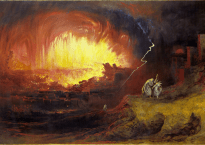
Many argue that the angry God of the Bible is an irrational and cruel tyrant who is not worthy of our admiration. You may feel some apathy toward this wrathful God, thinking He’s receiving His just deserts from people. Perhaps you have lingering fears about how we will be judged for failing tests of faith, for questioning the existence of suffering and divine damnation against the reality of God’s love, for harboring a sharp dislike for the wrathful potentate in the sky?

Years ago, I attended a class at a missionary training school in the heart of Oregon. The Bible teacher wrote the Greek word “hilasterion” on the white board and asked the class what it meant. His next question was whether redemption carries a propitiatory dimension.

I love the story in which God comes down to Mount Sinai. As Moses ascends, entering the thick cloud at the mountain’s summit, he experiences God’s reality and comes away shining with its divine afterglow (Exodus 34:29-35). He stands at the heart of this supreme revelation, crying out for God to show him more of His glory, His life, His character.

Today’s thoughts focus on the law. Unfortunately, there have been centuries of theological bias and bad teachings that disparage Old Testament law.
 Theological InTents